[av_slideshow_full size=’no scaling’ min_height=’0px’ stretch=” animation=’slide’ autoplay=’false’ interval=’5′ control_layout=’av-control-default’ src=” attachment=” attachment_size=” position=’top left’ repeat=’no-repeat’ attach=’scroll’]
[av_slide_full slide_type=’image’ id=’10229′ video=” mobile_image=” video_format=” video_ratio=” title=’Mammoth Safaris – 10 reasons why safaris are so expensive’ custom_title_size=” custom_content_size=” caption_pos=’caption_right caption_right_framed caption_framed’ link_apply=” link=’lightbox’ link_target=” button_label=” button_color=’light’ link1=’manually,http://’ link_target1=” button_label2=” button_color2=’light’ link2=’manually,http://’ link_target2=” font_color=” custom_title=” custom_content=” overlay_opacity=’0.1′ overlay_color=” overlay_pattern=” overlay_custom_pattern=”]
by Gareth Hardres-Williams
[/av_slide_full]
[/av_slideshow_full]
Why are African safaris so expensive?
There is no question that going on an African safari is not something that you can typically get away with without dipping deeply into your pockets, and we often find people somewhat sceptical of the amount that racks up for a trip to Africa.
From the simple economics of “supply and demand” – there is only so much of Botswana to sell and the demand is gigantic, to the very tangible cost implications of setting up a luxury camp literally in the middle of nowhere, there are a number of factors that impact the eventual cost of your safari.
In an effort to make these more explicit, here are 10 reasons why safari’s tend to be quite pricey affairs…
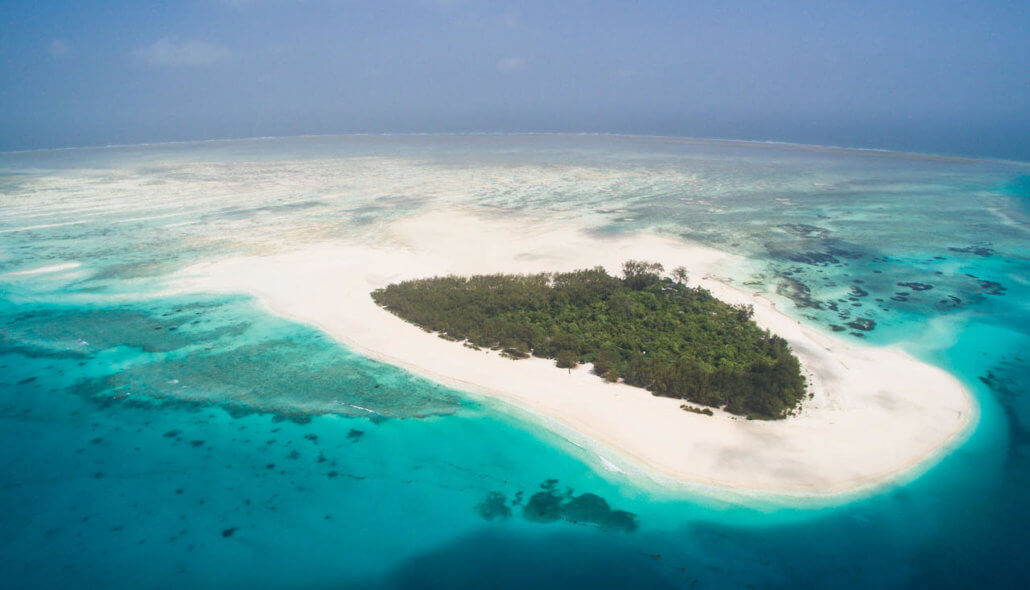
Remote destinations such as Mnemba Island off the coast of Tanzania can present logistical challenges that are costly to navigate
Image credit: &Beyond
Conservation – Safari model
Many of the larger (and indeed smaller) safari operators have long recognised that the sustainability of their business is inexorably linked to the conservation of the very areas they showcase. In many instances, governments of the day – for a host of reasons – lack the will / resources (or both) to properly conserve these areas and it is thanks to many a private – public partnership.
Another side to the same coin is a protectionist policy – this is the notion that one makes a sensitive and vulnerable resource more expensive in order to limit access and thereby protect it.
Expensive Concessions
Many of the areas in which the safaris are offered are not owned by the safari operators themselves and thus concession-rights fees and traversing-rights fees are payable to a landowner – sometimes private individuals, sometimes local communities and chiefdoms. Here again, the costs do indeed vary, but these costs certainly do impact the bottom line.
Africa is Mammoth – Logistics
Africa is a vast continent – one can fit the USA, China, India, Europe and Japan into Africa with some room to spare and this makes the logistics of operating a safari here quite challenging and subsequently more expensive.
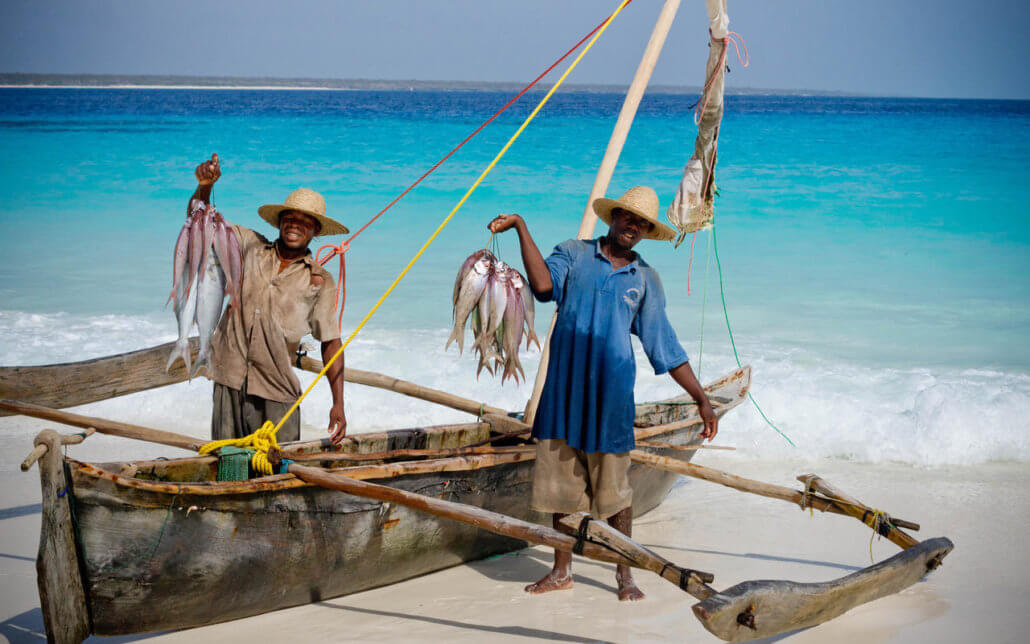
Much of the supplies that keep safari lodges stocked can be sourced locally, but this is not possible across the board and vast distances, as well as customs and excise charges see costs escalate
Hedging against currency fluctuations
Many operators will charge in US dollars, but pay for the bulk of the services they receive in a local currency. This is naturally subject to the vagaries of currency fluctuations and whilst they will sometimes win, they will often not. There is no doubt a hedge priced in to the service to negate the fluctuations.
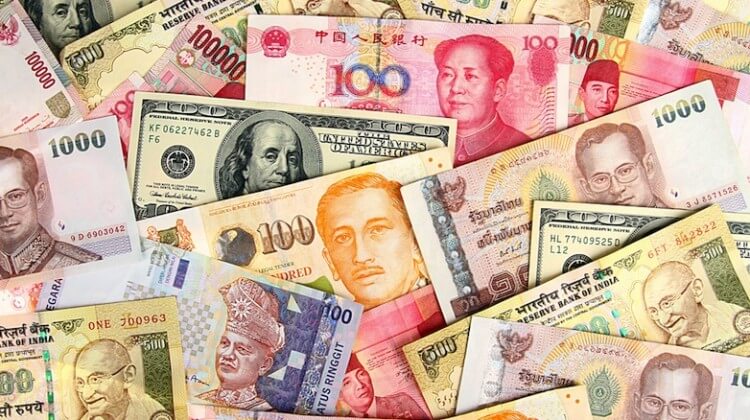
Whilst the American Dollar tends to take centre stage in much of the quoting and costing of African safaris, this doesn’t negate the fact that other more volatile currencies are involved in the transactions too. Hedging against this volatility will affect the cost of your safari – sometimes in your favour, but often adding to the cost
High staff to guest ratio
It is a largely quoted statistic in the African travel and tourism industry that safari operators work with big staff compliments (3 staff to every guest is often given as the industry average) and this is an expensive dynamic.
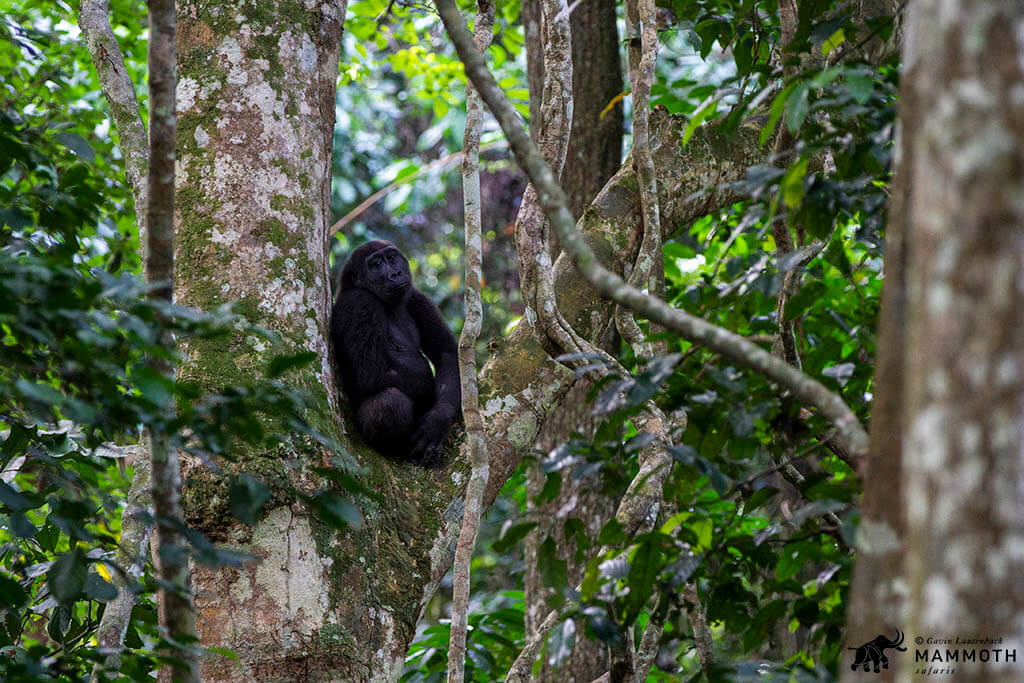
The Western Lowland Gorillas do spend a lot of time in trees and a very good pair of binoculars will most certainly enhance your experience here
The cost of time and strategic thinking…
Brochures, online adverts, rating sites and all the other “ beautiful noise” that sells you a safari, is a long long way away from the final product.
Uganda
Uganda provides excellent access to a number of habituated gorilla families at Bwindi Impenetrable Forest.
Attractions…
- Bwindi can easily be centred in a number of different itineraries to explore more of Uganda. Over and above the gorillas, the country has big game, the Nile river, excellent birding and of course the chimpanzees
- There is small flight access to various key sites for those that prefer to limit travel by road (Kihihi airstrip is still an hour’s drive from Bwindi but close enough)
- Bwindi Impenetrable Forest has excellent birding, including many rare and endemic species, so staying an extra day or two to experience this is well worth it
Drawbacks…
- As the most established gorilla trekking destination, high season demand means you’ll need to book well in advance to secure permits and the accommodation that fits your liking
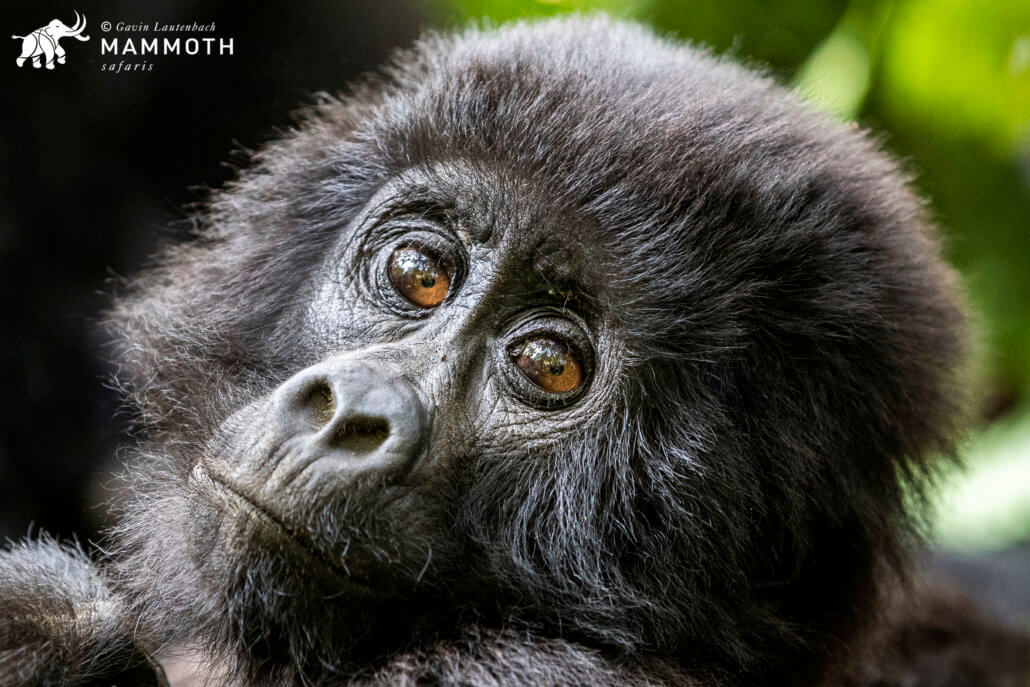
Checking the image label options here
Uganda all but pioneered gorilla trekking tourism and the country offers some excellent accommodation options. The Bwindi Impenetrable Forest offers some terrific sights
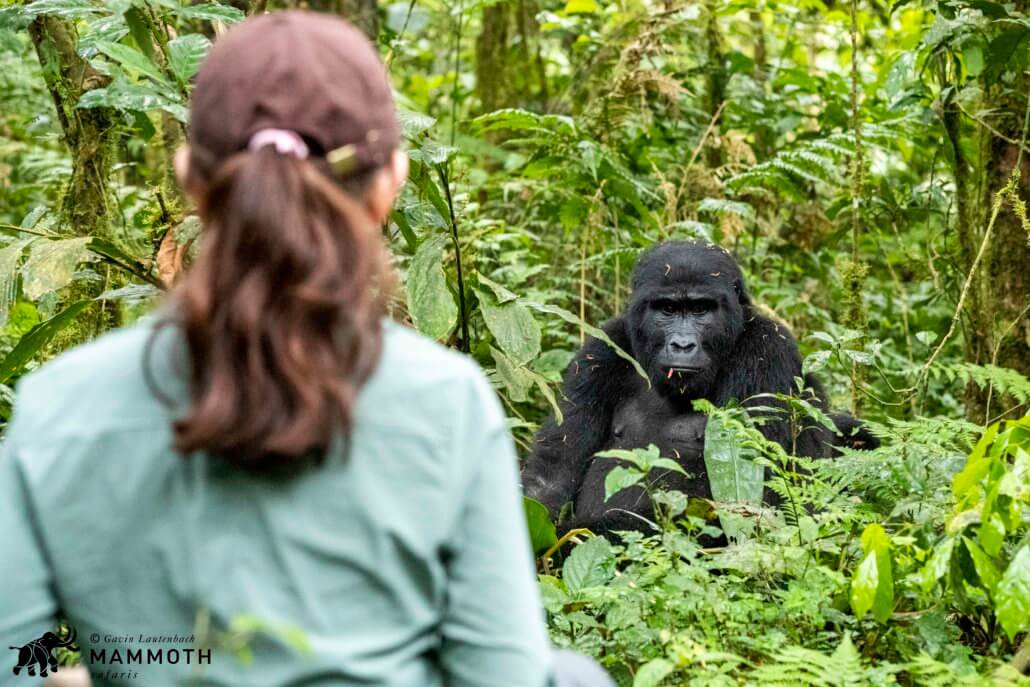
Checking the image label options here
There really is nothing like standing face-to-face with one of these big fellas. Here in the Bwindi Impenetrable Forest of Uganda some of the finest gorilla viewing is to be had
Rwanda
The renaissance that has occurred in Rwanda is nothing short of a miracle. After the 1994 genocide, the country has reinvigorated itself to become one of the shining lights in Africa. Gorilla tourism is a big part of the resurgent economy and as such the country is well geared to welcome international travellers. The airport is modern, the city hotels super and the wilderness areas are seeing an ever-increasing number of top-end lodges emerge. Volcanoes National Park is where the gorillas live.
Discover more about our travels to Rwanda here.
Attractions…
- A stable country with easy access to Kigali and the Volcanoes National Park
- A variety of lodges to choose from, with a growing number of top-end options for ultimate comfort (One&Only, Wilderness, Singita on the way)
- Opportunities to include the other two wildlife destinations of Nyungwe Forest and Akagera National Park into a relatively compact itinerary
Drawbacks…
- The park authorities have recently hiked the gorilla permits to $1500 per person. This is more than double the rate in Uganda and close to four times the rate in the DRC. For those wanting to do trek twice this means a significant cost.
- Volcanoes National Park doesn’t easily offer general forest/birding hikes if you’d like to stay longer and really immerse yourself in the landscape. (There are wonderful Golden Monkeys are an option as well as cultural trips)
- Some lodges are a decent drive of up to an hour away from the park HQ where the trekking is organised from.
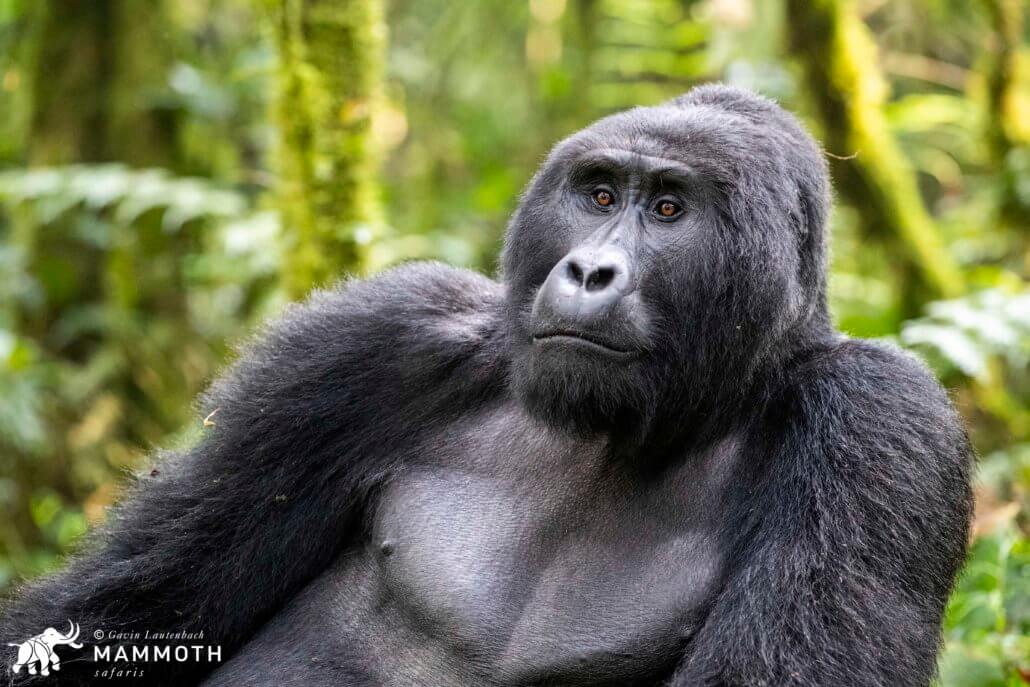
Rwanda has been quick to capitalise on the success of the Ugandan gorilla trekking offerings and is now similarly well geared to offer some exceptional experiences. Growth in tourism in this country is encouraging and we are excited by the opportunities here
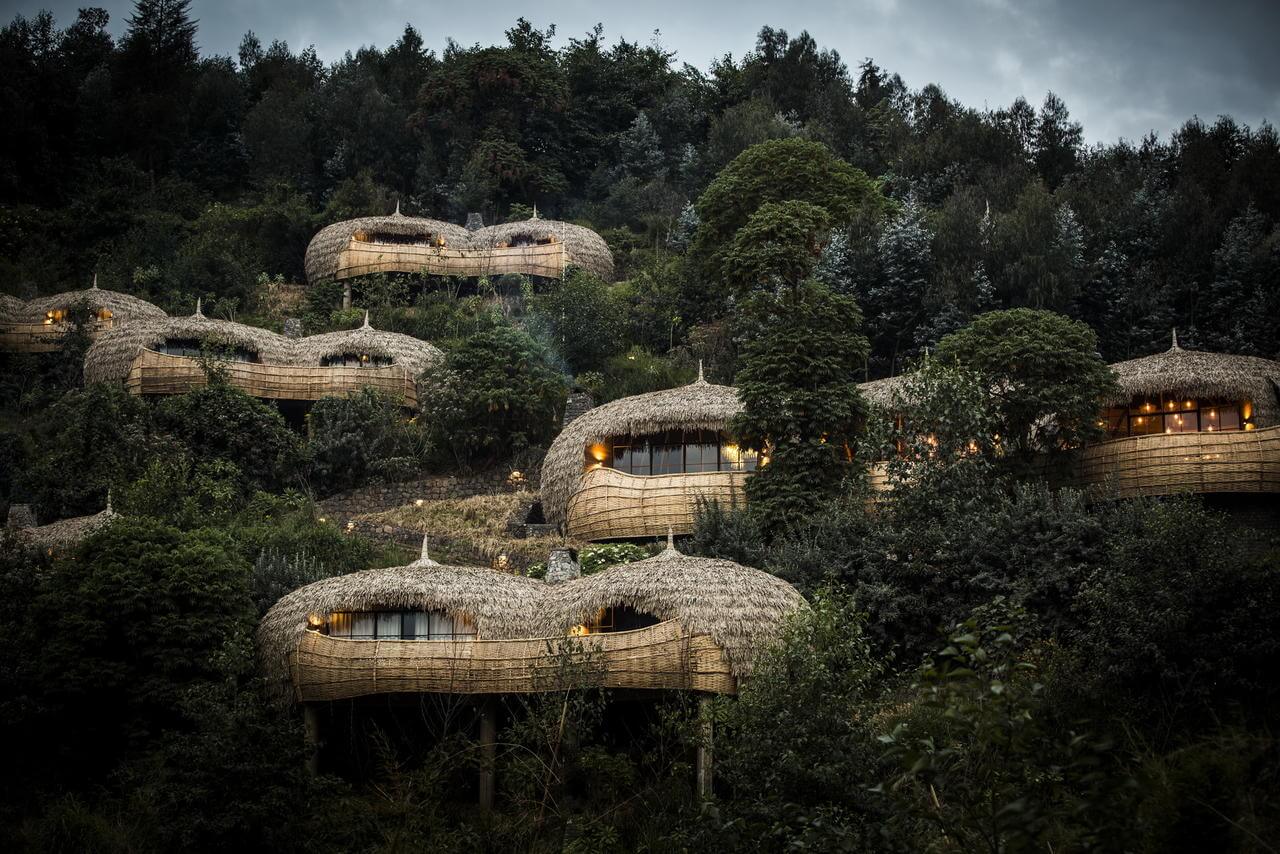
Bisate Lodge is located in the natural amphitheatre of an eroded volcanic cone and has dramatic views of the peaks of the volcanoes Bisoke, Karisimbi and Mikeno emerging through the Afro-alpine forests of nearby Volcanoes National Park. The lodge offers six sumptuous en-suite rooms which maximise comfort, warmth and views while retaining environmental principles and reflecting the culture of surrounding rural Rwanda. This lodge is operated by the safari expertise of Wilderness Safaris and represents one of the most luxurious offerings available from which to base yourself whilst in search of the gorillas
Image credit: Wilderness Safaris
Democratic Republic of the Congo
The ‘Congo’ is still a difficult place to visit, but efforts have been made to secure the eastern region right around Lake Kivu. Access is best by road coming in from Rwanda. The Virunga National Park has an arrangement that visitors to the park for gorillas can pay in advance but have their visa processed on arrival (and this works very well). There are 2 main gorilla options within the DRC…
Discover more about our travels to the DRC here.
Virunga National Park (DRC)
Attractions…
- Gorilla permits are currently significantly cheaper in the DRC than in Uganda and especially Rwanda. Rainy season deals may also be on offer further reducing the cost
- A much less crowded experience with far fewer tourists at present
- There is the real opportunity to have a positive impact on the immense work being done to secure the World Heritage Site that is Virunga National Park (including community projects and the Senkwekwe Gorilla Orphanage)
- The chance to include chimpanzee viewing and the hike to the top of the active volcano Nyiragongo. These can be included on even a short itinerary and can also be combined with other stays in neighbouring Rwanda
Drawbacks…
- Sporadic outbursts of unrest can unsettle you (and family!) before a trip! It is real, but does tend to happen much further north
- General lack of infrastructure in the country (though lodges are very comfortable with good food and cold beer!)
- Getting trip insurance can be difficult
Kahuzi-Beiga National Park (DRC)
Attractions…
- Often you are the only tourists there most of the time!
- A genuinely wild experience but still with habituated gorillas
- Access is easier than one thinks. A flight from Kigali to Kamembe on the Rwanda/DRC border gets you to the border town of Bukavu. From here it is a 1hr drive
- The Lwiro Primate Sanctuary is worth a visit and also within driving distance
Drawbacks…
- Safety & security. You are with armed guards as in all other gorilla trekking sites with tourists, but here the need is just a touch more real (though the highland section where the trekking happens is where all the park’s resources are pooled)
- At this stage no fantastic option to stay at the forest, so you will move in and out of Bukavu unless staying in the park bandas – very simple accommodation offerings
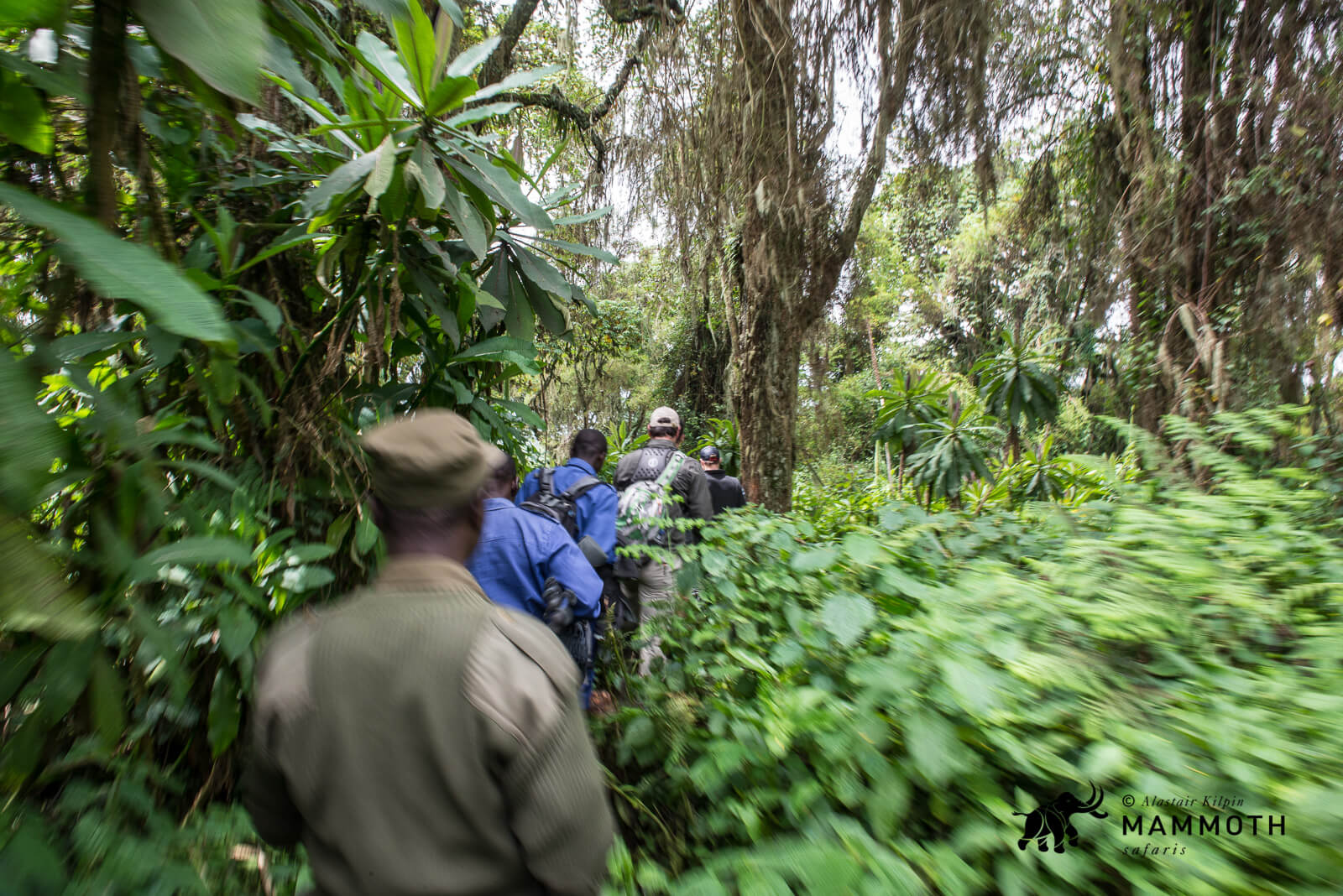
You will trek with your guide, park guards and also porters if you opt to have them assist you. All have good eyes in the forest!
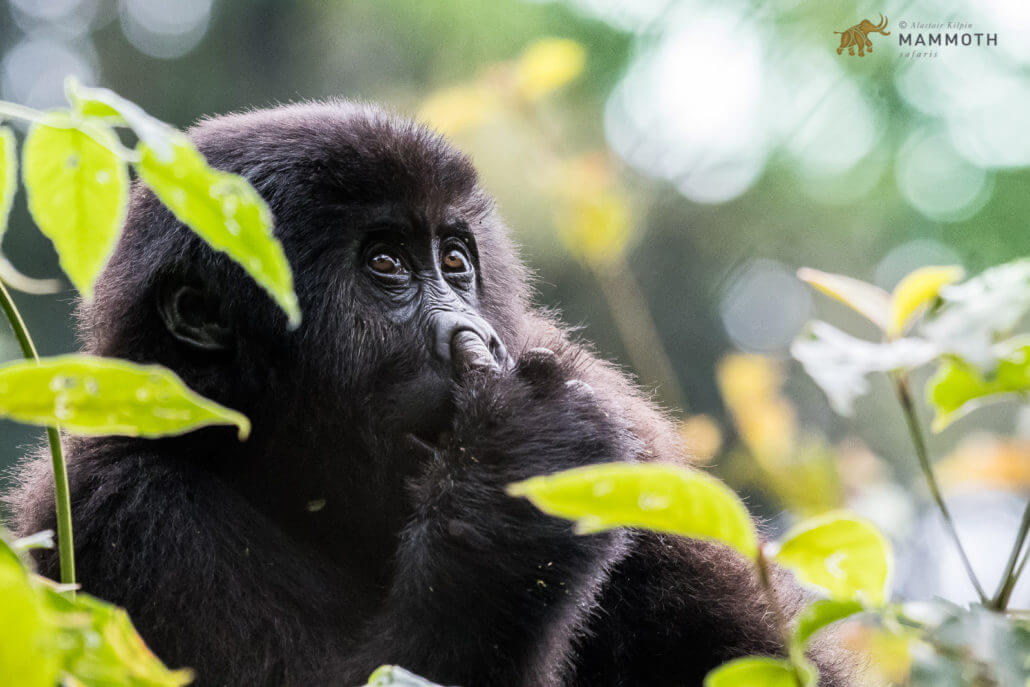
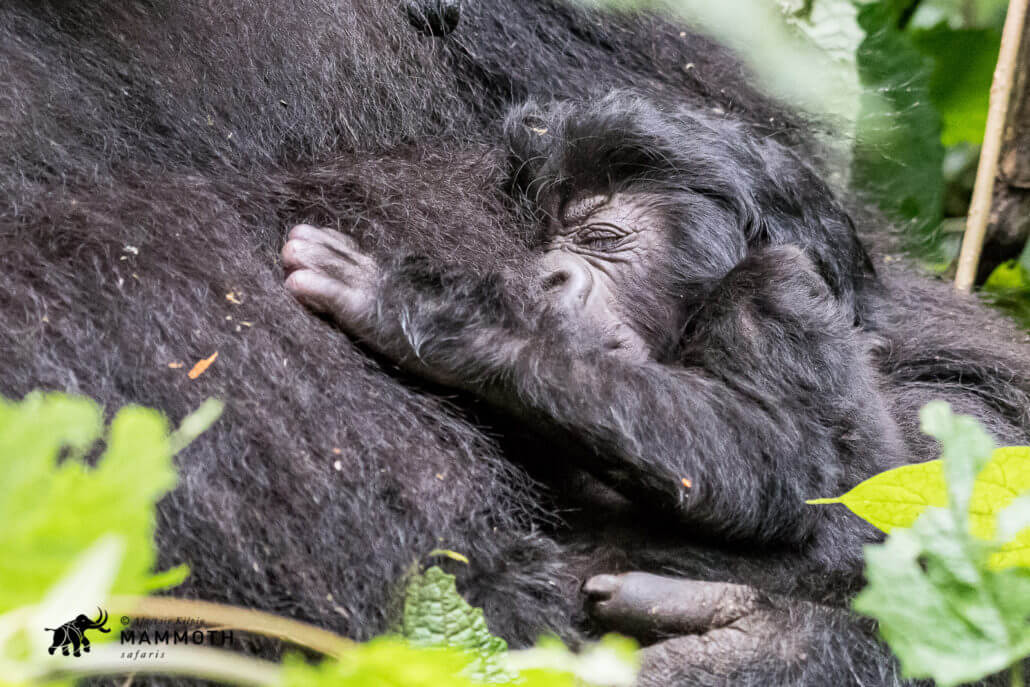
A young Gorilla in the Kahuzi-Beiga National Park in the Democratic Republic of the Congo – a truly wild experience
Republic of Congo (Congo-Brazzaville)
The Republic of the Congo is a former French Colony on the northern bank of the Congo River. Not to be confused with its neighbour, the Democratic Republic of the Congo (DRC). Odzala-Kokoua National Park is part of the second largest coherent rainforest area on earth, hence this piece of central Africa has a significant impact on our global climate, and the existence of all life. The heavily forested landscape is characterised by networks of swamps, bais and rivers making it the ideal habitat for western lowland gorillas.
International flights arrive at Maya-Maya Airport in Brazzaville and access to the Odzala-Kokoua National Park is from here via a 2-hour scheduled flight to the Mboko airstrip in the park. The Maratanceae forest is where all the gorilla trekking happens.
Attractions…
- Odzala-Kokoua National Park is a treasure trove of biodiversity and adventure
- The lodge offerings are comfortable and constantly improving
- There is the possibility of connecting to the Central African Republic from here
Drawbacks
- Its a rainforest – so expect muddy and wet! Be sure to bring spare socks and enough changes of clothes
- The air transfers into and out of the park are on fixed days of the week – limiting flexibility
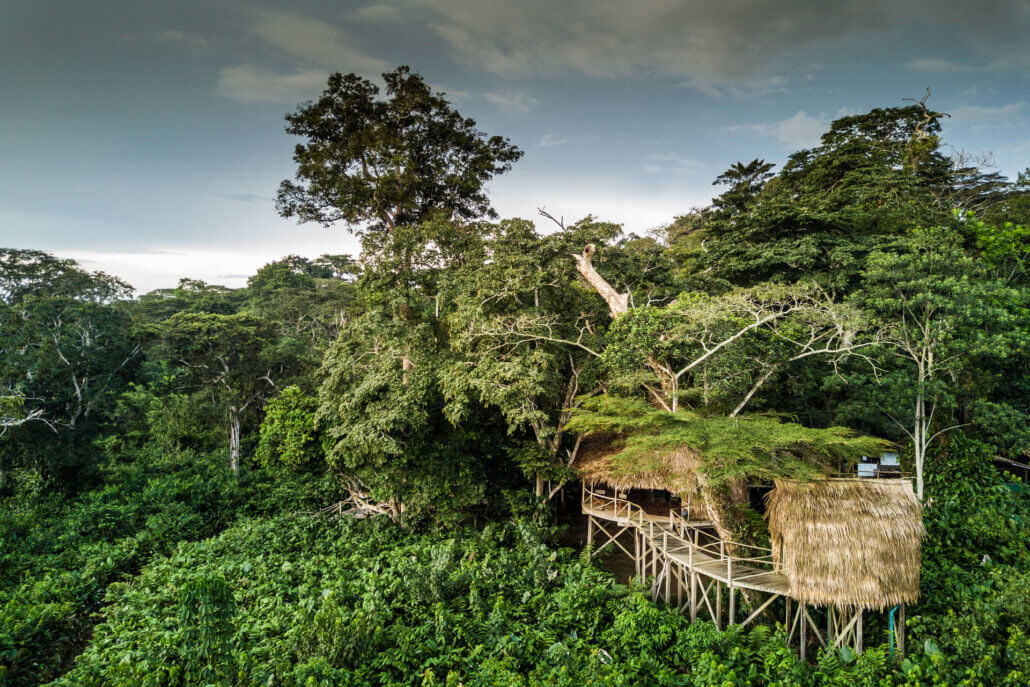
Ngaga Camp is in the Ndzehi Forest on the western boundary of Odzala-Kokoua National Park and consists of 6 rooms beautifully constructed from natural materials such as locally woven raffia palm panels. The rooms are raised on 3 – 4 meter stilts and have 360° wraparound viewing walkways that connect with the main area. The camp has a dining room, lounge, and bar area all on raised decks looking out into the rainforest. Pre-dinner drinks are served on the “star deck” with fire pit which is a dropped deck below the main area. Guests can enjoy post forest walk drinks, cocktail parties or private dinners on the river deck which is located on the Ngaga stream.
Image credit: Classic Portfolio
Central African Republic
In the midst of the ravaging armed conflict which tore the Central African Republic apart, forest elephants, gorillas, leopards and chimpanzees found safety in an extraordinary place – Dzanga Sangha. This is a true natural sanctuary for the emblematic species of the Congo Basin. The Dzanga Sangha National Park is hidden in the middle of the tropical forest, a World Heritage Site that has endured and prevailed, thanks in great part to the continuous support the WWF has provided to the eco-guards protecting the park. The park reopened for tourists in July of 2014. The Central African Republic is a country still very much in turmoil, but the access to the Dzangha-Sangha National Park by small plane from the regional centre of Bangui is very doable. More than just the gorillas, expect incredible pangolin, forest elephants, bongo and much more. This is a real adventure…
Attractions…
- True wilderness and a pioneering feel to any exploration here
- Exceptional biodiversity including forest elephant, forest buffalo, bongo, pangolin
Drawbacks
- As much as the unknown is an adventure, there is a fair amount of uncertainty here that can be unsetting to the uninitiated
- The CAR is not a politically stable country which adds an element of risk
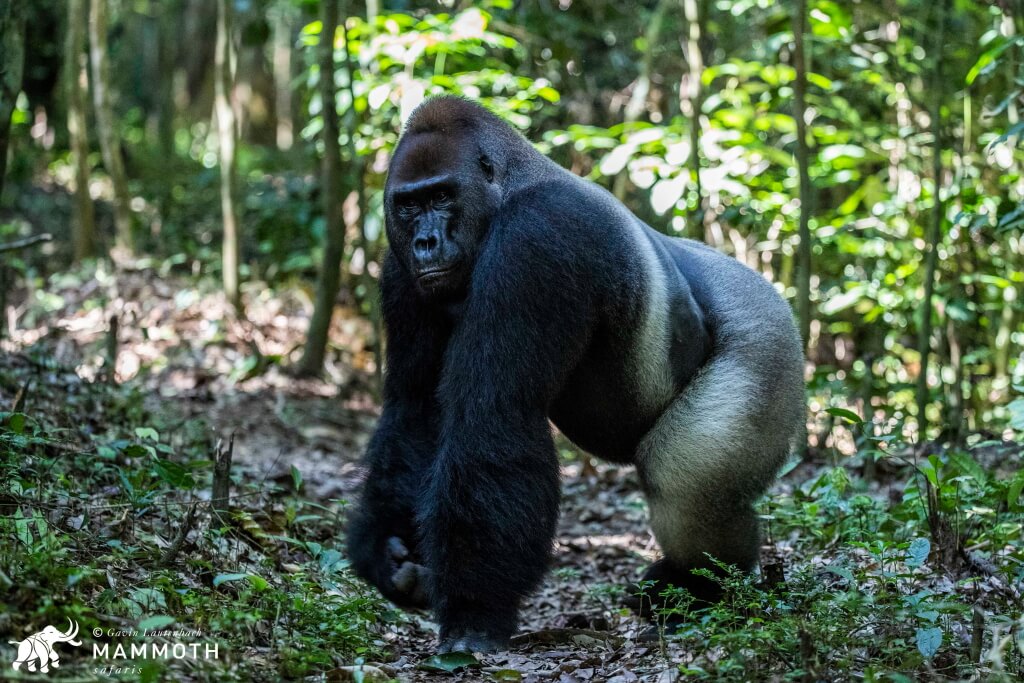
A spectacular and enormous “Silverback” in the Central African Republic demonstrates just why the adult male gorillas are given this title.
Oh – and how much do these “Silverbacks” weigh? The largest ones have been recorded at over 200kgs or 450 pounds!
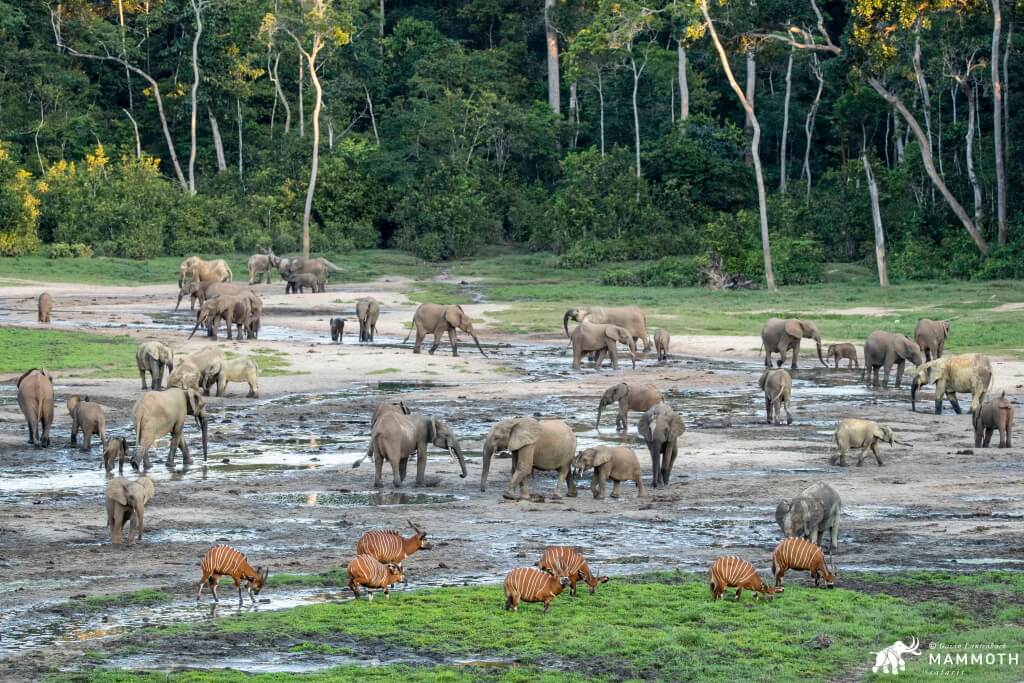
A quite incredible scene in the Central African Republic, capturing the wonderful diversity on offer here. A delightful breeding herd of forest elephant mingles with Bongo antelope on the fringe of the forest
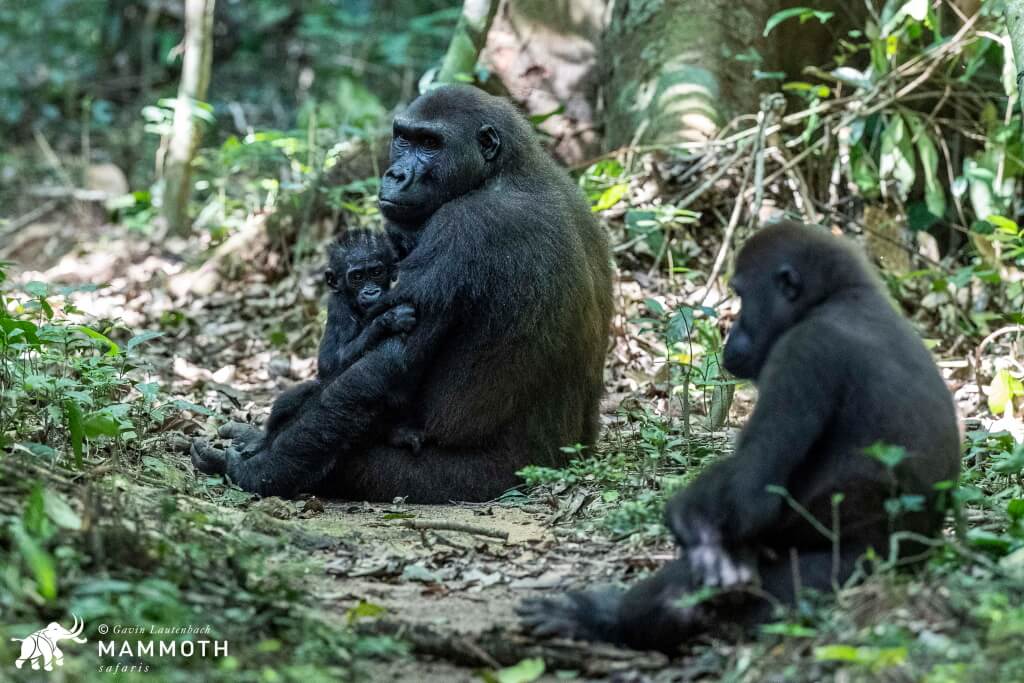
Family groups often settle on the forest floor to groom, feed, play and relax. As can be seen here, these opportunities make for such wonderful viewing
It is clear that there is a cost involved in
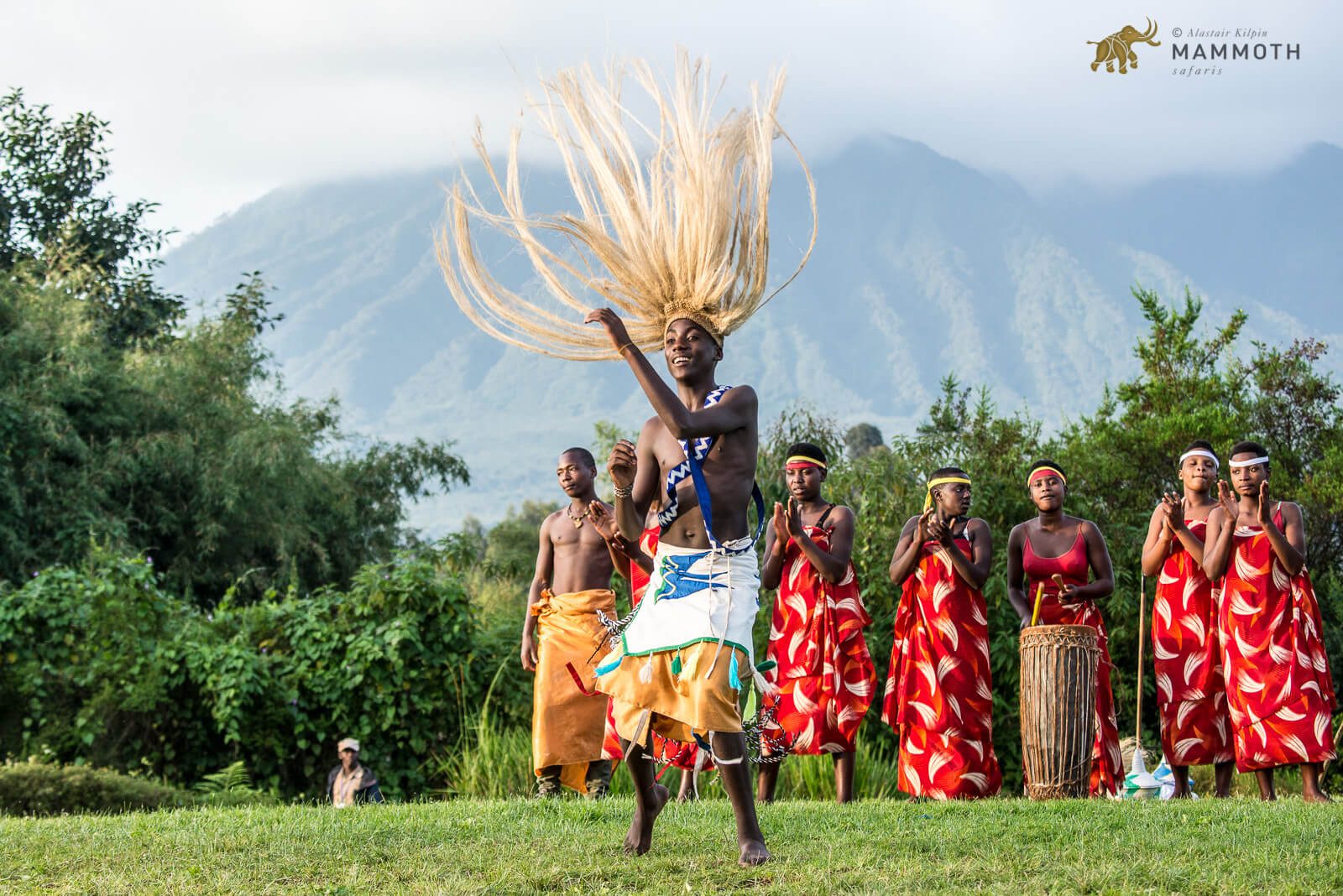
Many of these African countries also deliver some incredible cultural tourism offerings – providing insights into the traditions of the local peoples such as the music and dance of these tribes folk in Rwanda
How to make this journey of a lifetime a reality…
For more information on how to book your Mammoth Safaris adventure to a discover the Great Apes of Africa, in epic wilderness, enjoying exceptional wildlife and an unsurpassed experience of one of the incredible beasts, please contact a member of our sales team via email at info@mammothsafaris.com and visit www.mammothsafaris.com for more details and other unique destinations and journeys.